
রুমানা বিজনেস স্কুলের শেষ বর্ষের ছাত্রী। তার প্রিয় বিষয় — Supply Chain Management। তবে শুরুতে বিষয়টা তার কাছে কঠিন মনে হতো। Procurement, Logistics, Inventory, Distribution — একের পর এক ধাপ, আর প্রতিটিতেই চ্যালেঞ্জ।
তার সহপাঠীরা অনেকেই বলত, “এই সাবজেক্টে চাকরি পাওয়া কঠিন।” কিন্তু রুমানা একদিন এক সেমিনারে শুনল —
“একটা দেশের অর্থনীতির মেরুদণ্ড হলো দক্ষ সাপ্লাই চেইন, আর সেই চেইন সচল রাখে দক্ষ মানুষ।” এই কথাটা তার জীবনের টার্নিং পয়েন্ট হয়ে গেল।
 দক্ষতা গড়ার শুরু রুমানা নিজেকে বদলানোর সিদ্ধান্ত নিল।
সে অনলাইনে ফ্রি কোর্স করতে শুরু করল, YouTube থেকে Excel, ERP সিস্টেম আর ডেটা অ্যানালিটিক্স শেখা শুরু করল। প্রতিদিন অল্প অল্প করে নিজের স্কিল বাড়াতে লাগল।
একদিন তার শিক্ষক বললেন, “রুমানা, তুমি আমাদের সাপ্লাই চেইন সিমুলেশন প্রজেক্টটা লিড করবে?” সে ভয় পেল, কিন্তু সাহস করে “হ্যাঁ” বলল।
প্রজেক্টে ভুল হলো, ডেটা হারাল, ডেলিভারি লেট হলো — কিন্তু প্রতিটি ভুল থেকে নতুন কিছু শিখল।
 ফলাফল ও সাফল্য প্রজেক্ট শেষে রুমানার দলই একমাত্র যারা সম্পূর্ণ সাপ্লাই চেইন — Procurement থেকে Delivery পর্যন্ত — সফলভাবে পরিচালনা করল।
সেই কাজ দেখেই এক বহুজাতিক কোম্পানি তাকে ইন্টার্নশিপের সুযোগ দিল। আজ সে সেখানে একজন Supply Chain Analyst, আর তার কথায় — “দক্ষতা রাতারাতি আসে না, আসে প্রতিদিনের ছোট ছোট শেখা ও অনুশীলন থেকে।”
 শিক্ষণীয় বার্তা সাপ্লাই চেইনের প্রতিটি ধাপ যেমন একে অপরের সাথে যুক্ত, তেমনি জীবনের প্রতিটি শেখাও তোমার পরের সাফল্যের ভিত্তি গড়ে তোলে।
হাল ছেড়ো না, প্রতিদিন একটু করে শেখো — কারণ দক্ষতা গড়ার চেইন কখনও শেষ হয় না।
 আজই তোমার যাত্রা শুরু করো! তুমি কি রুমানার মতো নিজের ক্যারিয়ারে পরিবর্তন আনতে চাও?
শুরু করো তোমার Skill Development Journey in Supply Chain Management —
 অনলাইন কোর্স, প্র্যাকটিক্যাল ওয়ার্কশপ, আর মেন্টরশিপ প্রোগ্রামের মাধ্যমে নিজের সক্ষমতা বাড়াও। প্রতিদিনের একটি নতুন শেখাই তোমাকে এগিয়ে নিয়ে যাবে সাফল্যের পথে।
আজই শুরু করো — তোমার ভবিষ্যৎ অপেক্ষা করছে!
 Presented by:
  Institute of Supply Chain Excellence Bangladesh (ISCEB) Empowering Learners to Build the Future of Supply Chain Excellence
 www.isceb.com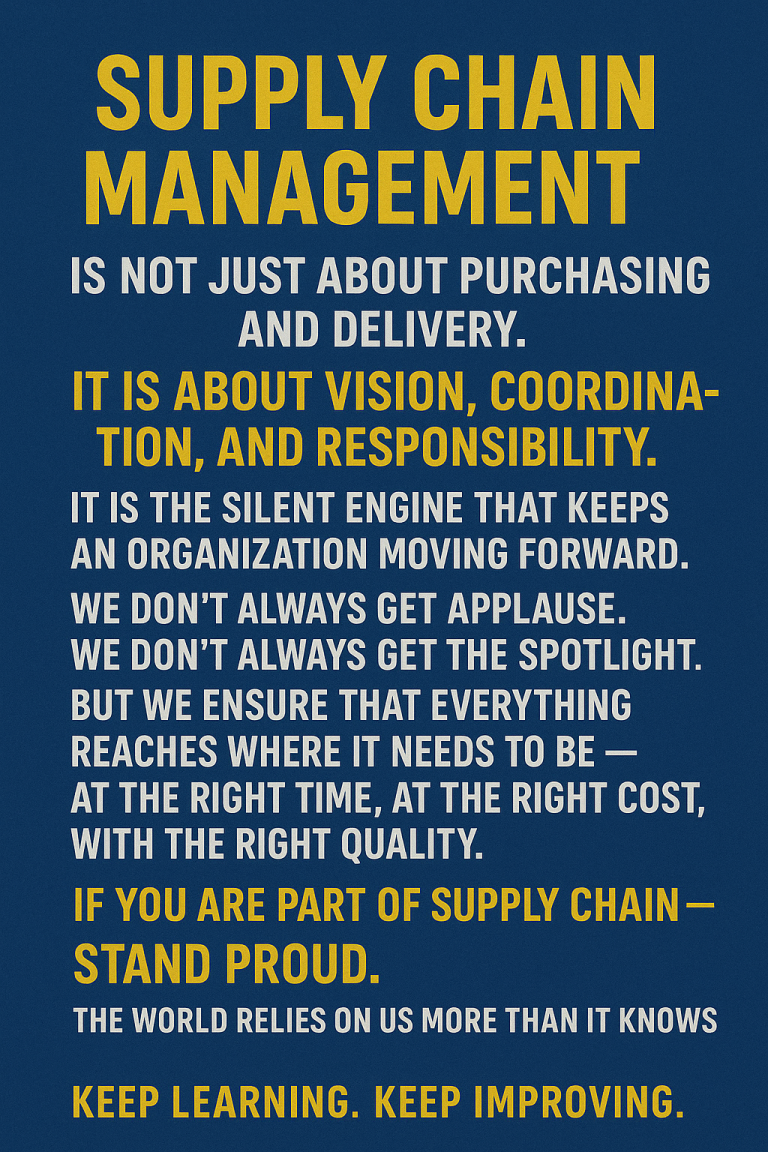
There was once a young man named Rahim who worked in a small warehouse of a medical supplier. His job was simple — Count boxes, check lists, dispatch items.
Nothing exciting. Nothing that looked “important.”
People around him often said:
“It’s just supply work.”
“Anyone can do that.”
“There’s no success here.”
But Rahim noticed something different.
Every morning, when orders came in from hospitals, he saw names like ICU, Emergency, Critical Ward. And he realized—
These boxes weren’t just “stock.” They were hope.
They were life.
One afternoon, a hospital called urgently.
A newborn baby needed a special life-support tube.
Stock was low everywhere.
Time was running out.
Rahim didn’t wait for instructions.
He checked nearby locations, contacted suppliers directly, and drove himself to collect the item.
He arrived at the hospital just in time.
That small, unseen effort saved a life.
No one clapped.
No news reporter came.
No one posted it on social media.
But the child lived.
The family breathed again.
And Rahim knew — this is success.
From that day, he understood:
Supply Chain is not behind the stage.
It is the stage that makes everything else possible.
Without procurement, hospitals cannot treat.
Without warehouses, pharmacies cannot dispense.
Without logistics, surgeries cannot proceed.
Without planning, industries cannot function.
Without supply chain — life stops.
Rahim continued learning, step by step.
He took courses. He followed industry leaders.
He switched roles — warehouse → logistics → planning → procurement.
He grew not because he wanted a bigger title,
but because he had already found his purpose.
Years later, he became the Supply Chain Manager of a major hospital.
Doctors respected him.
Management relied on him.
Patients benefited from him.
But he still remembered:
Success is not always loud.
Sometimes success is just knowing that what you do matters — deeply.
 Moral of the Story
Every role has value — especially the ones people overlook.
Success is not only measured in rank or salary.
If your work helps others — you are already successful.
And in the world of supply chain:
We are the invisible guardians of continuity.
The silent protectors of progress.
The backbone of every mission.